Will RF4CE beat the IR remote control? A simple comparison of RF4CE and infrared remotes, applications, extenders, and future TV remote technologies.
Remote control technology has come a long way since the first simple channel changers. People are asking a big question today: can RF4CE take over as the main technology for TVs and home entertainment systems, beating the IR remote?
For decades, infrared remotes have been the standard. They are used to control everything from TVs to universal remote controls. But newer wireless technologies, including RF4CE, are redefining how devices talk to each other. RF4CE is getting a lot of interest because it doesn’t need a line of sight, has a longer range, and works with smart devices.
In this article, we’ll talk about how IR remote controls function, what RF4CE technology can do, and whether RF4CE can really take the role of infrared remotes in everyday life. This page is for people who are new to the subject and want to teach, not over-optimise.
What Is an Infrared Remote Control
An infrared remote control uses infrared light to send signals from the remote to a device such as a TV, cable box, or DVD player.
How IR Remote Control Works
- When a button is pressed, the remote emits an infrared signal
- The signal carries a coded command
- The TV receives the signal through an IR sensor
- The TV performs the requested action
This technology is simple, reliable, and inexpensive.
Common Uses of Infrared Remote Control for TV

Infrared remotes are still widely used today.
Examples include:
- Standard TV remotes
- Universal remote for Samsung TV
- Cable and satellite remotes
- DVD and Blu ray players
Even advanced systems like the DirecTV RC73 IR RF remote control include infrared support for compatibility.
What Is RF4CE Technology
RF4CE stands for Radio Frequency for Consumer Electronics. Unlike infrared, RF4CE uses radio waves instead of light to communicate with devices.
Key Characteristics of RF4CE
- Does not require line of sight
- Works through walls and furniture
- Offers longer range than IR
- Supports two way communication
This makes RF4CE ideal for smart TVs and connected home systems.
How RF4CE Remotes Work
RF4CE remotes communicate directly with devices using a secure radio signal.
Step by Step Communication
- The remote sends a radio signal
- The TV or receiver receives it instantly
- Two way feedback confirms the command
- The action is executed without delay
This is why RF remotes feel faster and more responsive.
RF4CE vs IR Remote Control Comparison
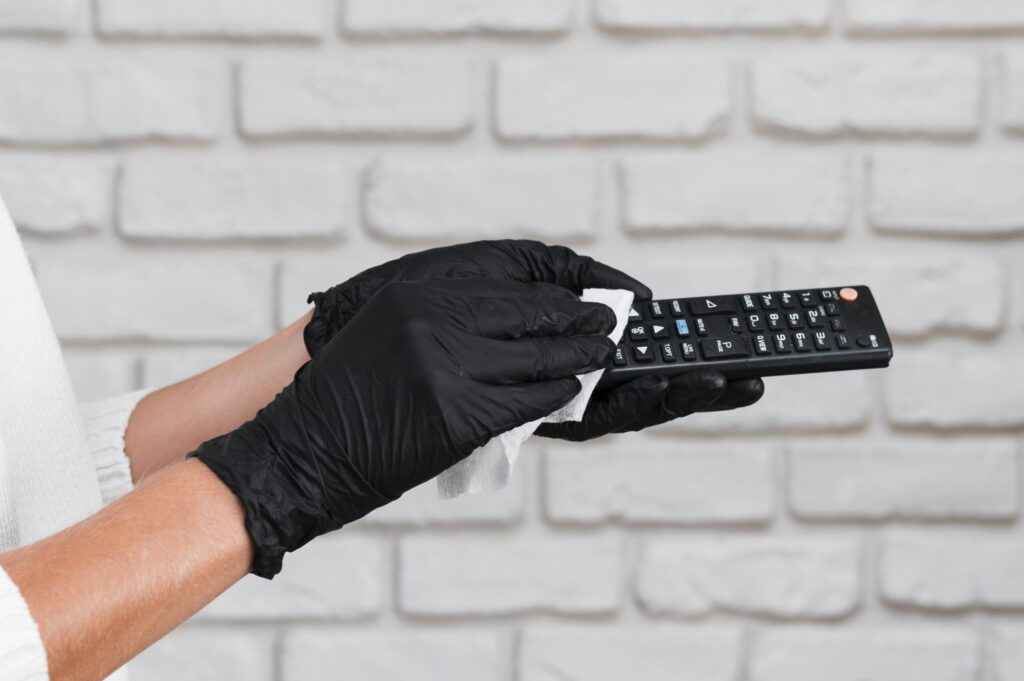
Understanding the differences helps answer the question: will RF4CE beat the IR remote control.
Infrared Remote Control Advantages
- Low cost
- Simple design
- Long battery life
- Universal compatibility
Infrared Remote Control Limitations
- Requires line of sight
- Limited range
- Easily blocked by objects
- One way communication
RF4CE Remote Advantages
- No need to point at the TV
- Works from another room
- Faster response time
- Ideal for smart features
RF4CE Limitations
- Higher manufacturing cost
- Requires pairing
- Not compatible with older TVs
Role of IR Remote Apps and Mobile Solutions
Many users now rely on an IR remote app or infrared remote control app on smartphones.
How IR Remote Apps Work
Phones with built-in IR blasters can act as:
- i r remote control
- TV remote replacements
- Universal control tools
These apps rely on the same infrared technology used in traditional remotes.
Limitations of IR Remote Control Apps
While convenient, IR remote control apps have drawbacks.
- Require phone hardware support
- Line of sight still needed
- Limited device compatibility
RF based remotes do not face these limitations.
What Is an IR Infrared Remote Control Extender

An IR infrared remote control extender helps overcome line of sight problems.
How IR Extenders Work
- Receives infrared signal
- Converts and relays it
- Extends range to hidden devices
This is commonly used in home theaters.
How to Block IR Remote Control Signals
Some users search for how to block IR remote control signals for privacy or testing.
Common methods include:
- Covering IR sensors
- Using IR blocking materials
- Software based IR filters
RF remotes are harder to block because they use radio frequencies.
Why Smart TVs Are Moving Away from IR
Modern smart TVs demand advanced control features.
Reasons manufacturers prefer RF4CE:
- Voice control support
- Gesture recognition
- App integration
- Faster navigation
This shift increases interest in whether RF4CE will replace infrared remote control systems.
Universal Remotes and Hybrid Technology
Many remotes today support both RF and IR.
Example:
- DirecTV RC73 IR RF remote control
This hybrid approach ensures:
- Backward compatibility
- Flexible device control
- Smooth transition to RF technology
Will RF4CE Beat the IR Remote Control Completely
The answer is complex.
Short Answer
RF4CE will likely dominate smart and premium devices, but IR remote control will not disappear entirely.
Long Answer
Infrared remains cost effective and reliable for basic TVs. RF4CE excels in advanced environments where speed, range, and smart integration matter.
Real World Use Cases
Where IR Remote Control Still Wins
- Budget televisions
- Simple devices
- Universal compatibility
Where RF4CE Clearly Wins
- Smart TVs
- Streaming devices
- Voice enabled remotes
- Home automation systems
Frequently Asked Questions
Will RF4CE replace infrared remote control
RF4CE is expected to replace infrared remote control in many modern and smart TV environments, especially where advanced features like voice control, faster response time, and long range operation are required. Smart TVs and streaming devices benefit greatly from RF4CE because it does not require a direct line of sight.
However, infrared remote control is unlikely to disappear completely. IR technology is inexpensive, simple to manufacture, and reliable for basic TV functions. For low cost televisions and simple devices, infrared remotes will likely remain in use for many years.
Do RF remotes work through walls
Yes, RF4CE remotes work through walls, furniture, and cabinets because they use radio frequency signals instead of light. Unlike infrared remotes, which must be pointed directly at the device, RF4CE remotes can communicate even when the TV or receiver is in another room. This makes RF remotes especially useful for home theater setups and smart homes where devices are hidden from view.
Are IR remotes outdated
IR remotes are not outdated, but they are limited compared to RF based alternatives. Infrared technology continues to be widely used because it is affordable, energy efficient, and compatible with a wide range of devices. Many households still rely on IR remotes daily without any issues.
That said, IR remotes lack advanced features such as two way communication and extended range. While newer technologies offer more convenience, infrared remotes remain practical for basic TV control.
Can a universal remote support RF and IR
Yes, many modern universal remotes support both RF and IR technologies. These hybrid remotes are designed to provide maximum compatibility with both older and newer devices.
By supporting IR, the remote can control traditional TVs and media players. By supporting RF, it can operate smart TVs, streaming boxes, and set top boxes. This dual functionality allows users to manage multiple devices with a single remote, making universal remotes a flexible and future-proof solution.
Is RF4CE safe to use
RF4CE is safe for everyday use and operates well within international safety standards. The radio frequency signals used by RF4CE remotes are low power and non ionizing, meaning they do not damage cells or tissues.
These signals are similar to those used in WiFi and Bluetooth devices, which are commonly used worldwide. Extensive testing and regulation ensure that RF4CE remotes pose no health risks during normal operation.
Cost and Battery Life Comparison
Infrared Remote Controls
Infrared remote controls are generally lower in cost because their design is simple and requires fewer components. They are easy to manufacture and have been mass produced for decades.
Another advantage of infrared remotes is longer battery life. Since infrared signals are only transmitted when a button is pressed and consume very little power, batteries often last for months or even years. This efficiency makes IR remotes ideal for basic household use.
RF4CE Remotes
RF4CE remotes typically have a higher cost due to more advanced internal components and communication features. They support two way communication, pairing processes, and sometimes additional functions such as voice input.
Because RF4CE remotes transmit radio signals, they use slightly more power than infrared remotes. However, improvements in battery technology and power management have minimized this difference. The added functionality often justifies the higher cost for users who value convenience and performance.
Why Cost Still Matters
Cost remains a key reason infrared remotes are still widely used. For manufacturers, producing IR remotes keeps device prices competitive. For consumers, lower cost and long battery life make infrared remotes a practical and reliable option for everyday TV viewing.
Future of Remote Control Technology
The future of remote control technology is moving toward smarter and more flexible solutions. RF based remotes are becoming more common as smart TVs and connected devices continue to grow in popularity. App based control allows users to manage devices directly from smartphones, reducing the need for physical remotes.
Voice assistants are also playing a larger role, enabling hands free control of TVs and home entertainment systems. Artificial intelligence is being introduced to personalize user experience, such as recommending content or adapting controls based on viewing habits.
Despite these advancements, infrared technology is expected to continue in hybrid models. By combining IR and RF technologies, manufacturers can offer compatibility, affordability, and modern features in a single remote control solution.
Final Conclusion
So, will RF4CE win against the IR remote? Yes, in many current situations, the answer is yes. RF4CE has a better range, is easier to use, and has smarter features than infrared. Infrared remote control technology, on the other hand, is still dependable, cheap, and built into millions of products throughout the world.
Instead of a full replacement, the future looks like coexistence. RF4CE will take over the smart and premium markets, but IR remotes will still be used for basic and universal purposes. Knowing about both technologies helps people pick the best one for their home entertainment system.